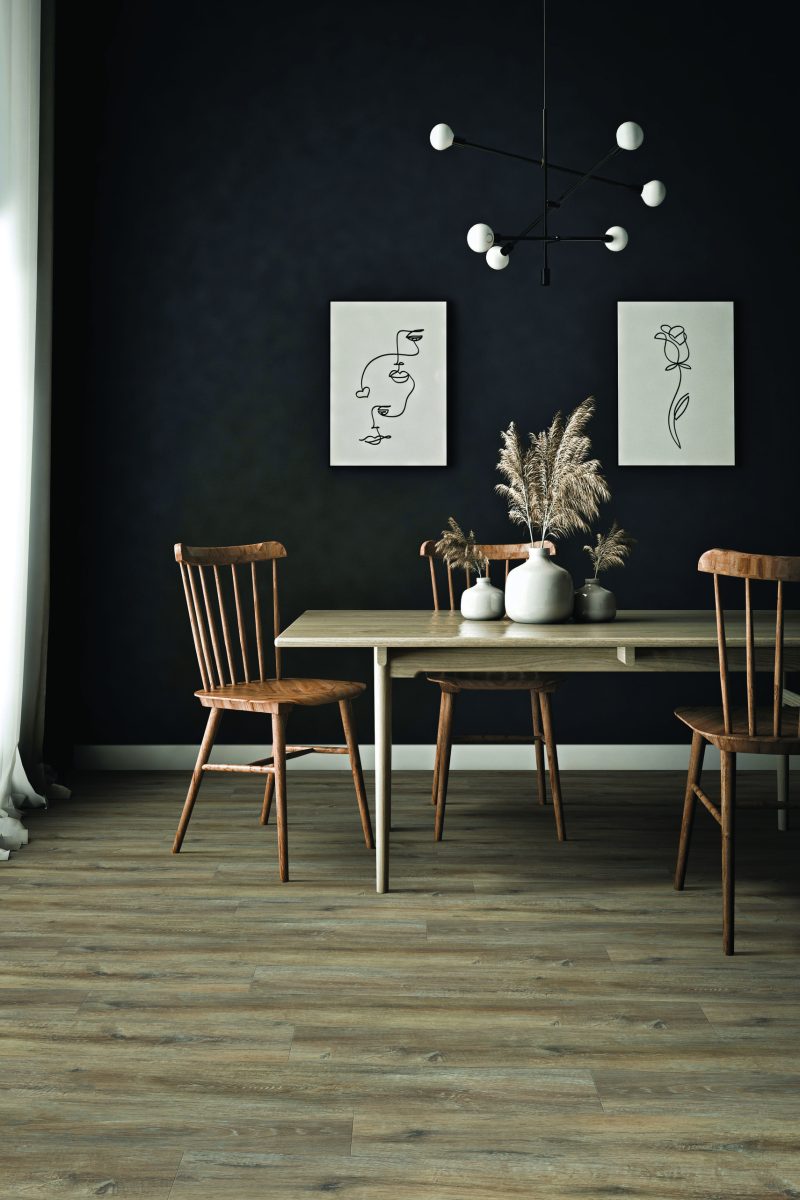
DURABLE, WATERPROOF TILE ALTERNATIVE
The Smart Tile Alternative for London Homes
Luxury Vinyl Tile (LVT) is the modern, high-performance solution for achieving the upscale look of natural stone or ceramic tile without the cold feel, complex grouting, or risk of cracking. Our LVT collections feature rigid, dimensionally stable cores (SPC/WPC) and hyper-durable wear layers, making them 100% waterproof and ideal for high-traffic areas, kitchens, bathrooms, and basements. LVT delivers on both stunning aesthetics and technical longevity.
Understanding LVT Durability
To ensure you choose the right flooring, focus on these critical technical metrics that determine your floor’s lifespan and performance:
- Core Type (SPC vs. WPC): The core provides dimensional stability. SPC (Stone Plastic Composite) is ultra-dense and resists indentation best. WPC (Wood Plastic Composite) is lighter, providing a warmer, softer feel underfoot. Both are 100% waterproof.
- Wear Layer Thickness: Measured in mil, this transparent top layer protects the print film. We recommend a minimum 20 mil (0.5mm) for active residential use with children or pets, and 28 mil or higher for any light commercial application.
- Installation Method: LVT is available as Click-Lock (floating installation) or Dryback (glue-down, often preferred for commercial or high-heat areas).
Luxury Vinyl Tile (LVT) Engineered for London, Ontario Weather
The temperature fluctuations in London, Ontario—from humid summers to below-freezing winters—can cause natural stone or ceramic floors to feel frigid and may affect grout integrity. Our modern, rigid-core LVT is specifically engineered to address these local challenges.
Superior Thermal and Dimensional Stability: Unlike older vinyl products, today’s SPC (Stone Plastic Composite) LVT cores maintain their shape and do not expand or contract significantly, even in the extreme heat or cold of an Ontario basement or three-season room. Additionally, LVT has a warmer touch than ceramic, and its 100% waterproof construction easily handles tracking in melted snow, slush, and road salt without warping, lifting, or supporting mold growth.
Compare Our Leading Luxury Vinyl Tile Brands
We carry luxury vinyl tile flooring from trusted brands such as:
|
Brand |
Best For |
Key Feature/Technology |
Spec Data |
|
Basements & High-Traffic Residential |
Ceramic Bead Technology on wear layer for maximum scratch and stain resistance. High-density rigid core (SPC). |
Waterproof, FloorScore Certified, often includes attached Cork or IXPE backing for sound and thermal insulation. 22 mil wear layer is common. |
|
|
Noise Reduction & Temperature Stability |
UnderTone™ ultra-quiet pad (infused underlayment) for superior sound absorption. Nimbus Core (modified SPC) for enhanced stability. |
Wide Temperature Range stability (e.g., -30°C to +50°C), 22 mil wear layer available. TrueShield™ coating. FloorScore Certified. |
|
|
Commercial Use & High Stability |
Solid Fiberglass Core (in some glue-down collections) for exceptional dimensional stability and commercial-grade application. |
High-quality SPC Rigid Core options with I4F/5G click systems. 20-22 mil wear layers. Ceramic Bead Coating for durability. FloorScore Certified. |
|
|
Air Quality & Antimicrobial Protection |
Nano-Silver Technology (in select LooseLay lines) for natural antimicrobial protection. Commercial-rated performance. |
FloorScore Certified for low VOCs, available in both Dryback (Glue-Down) and click-lock formats. Up to 20 mil wear layer. |
Frequently Asked Questions
1. What is the key difference between LVT and LVP?
The core materials (SPC or WPC) are the same, but LVT is tile-shaped to replicate stone or ceramic looks, while LVP is plank-shaped to replicate wood. Both offer the same 100% waterproof, durable construction.
2. What wear layer thickness is recommended for LVT in a busy London home?
For active residential use with children or pets, we recommend a minimum 20 mil (0.5mm) wear layer. For light commercial spaces or very high traffic areas, a 28 mil or higher wear layer provides superior scratch resistance and longevity.
3. Is LVT safe to install in basements in the London, Ontario climate?
Yes, modern LVT featuring a rigid SPC core is the ideal choice for basements. Its stone-polymer composite core is 100% waterproof and highly dimensionally stable, preventing lifting or curling common with older flexible vinyl in moist, temperature-fluctuating environments.
4. What is the difference between SPC and WPC core in luxury vinyl?
SPC (Stone Plastic Composite) uses a core made mostly of calcium carbonate, making it denser and highly stable. WPC (Wood Plastic Composite) is lighter and contains foaming agents, making it softer and warmer underfoot, but slightly less dense.
5. Can I install LVT over existing ceramic tile or concrete?
Yes, LVT can be installed over existing hard surfaces. The key requirement is that the subfloor must be clean, dry, and perfectly flat. LVT’s rigid core is excellent at resisting ‘telegraphing’ of minor subfloor imperfections.
6. Is LVT a healthy flooring choice for indoor air quality?
Modern LVT is considered safe for air quality. Most premium brands we carry are FloorScore Certified and Phthalate-Free, meaning they meet strict standards for low VOC (Volatile Organic Compound) emissions.
7. Does LVT require an underlayment pad?\
Many of our rigid LVT lines, such as those from Beaulieu and Biyork, come with an attached cork or IXPE foam pad. If your LVT does not have an attached pad, a quality underlayment is recommended to improve sound dampening and comfort underfoot.
8. How does LVT compare to ceramic tile in terms of cost and installation?
LVT is generally more cost-effective than ceramic tile. Its click-lock or loose-lay installation is significantly faster, requires no messy mortar or grout (unless specifically designed for it), and can often be done as a DIY project, saving on labour costs.
9. What temperature range can LVT withstand?
Premium SPC-core LVT is engineered for a wide range, typically from -20°C to 50°C, making it suitable for areas like unheated three-season sunrooms or cabins where temperature swings are common, provided it is installed according to the manufacturer’s maximum area limits.
10. Is LVT recommended for use with hydronic radiant heating systems?
Yes, LVT is compatible with most hydronic (water-based) radiant heating systems, provided the surface temperature does not exceed the manufacturer’s specified limit, which is typically 29°C (85°F). Its rigidity helps transfer heat efficiently and prevents warping.