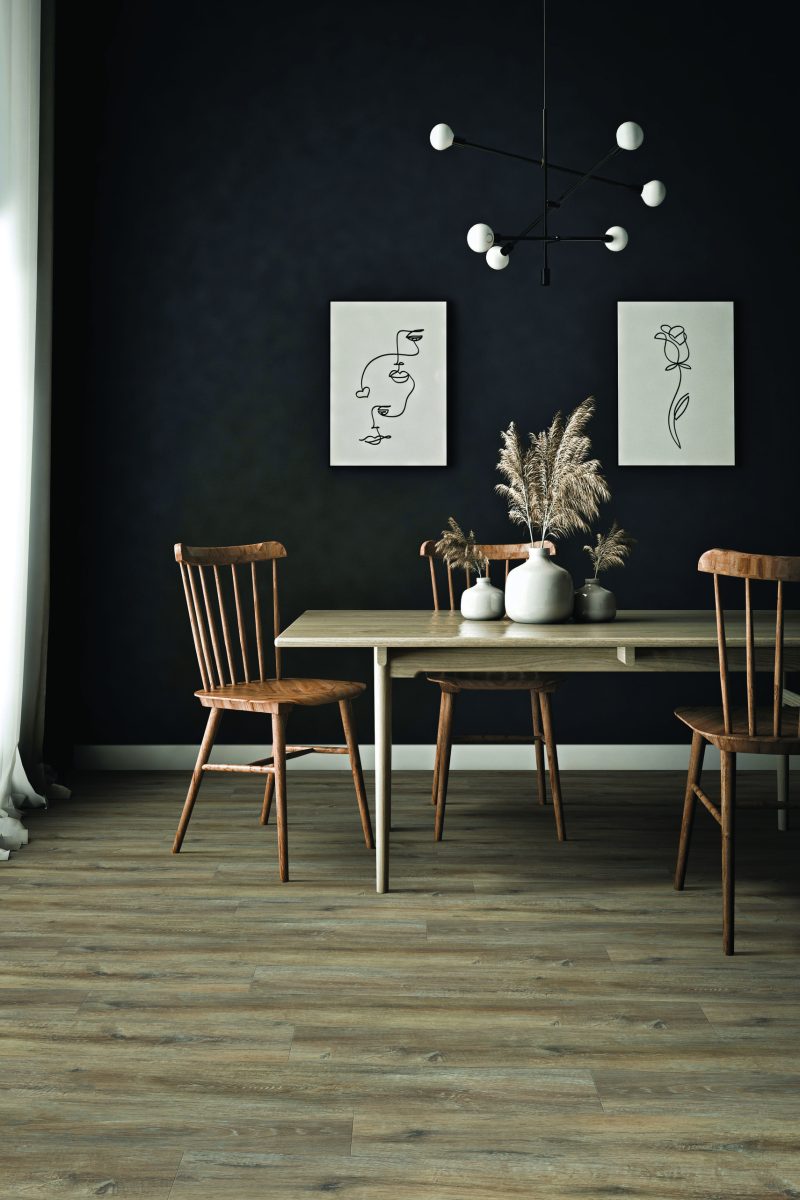
RIGID CORE WATERPROOFING & UNMATCHED DURABILITY
The Smart, Waterproof Wood Alternative
Luxury Vinyl Plank LVP has revolutionized resilient flooring, providing the elegant look of hardwood with superior performance. Modern LVP features a dense SPC (Stone Polymer Composite) rigid core, which provides dimensional stability far superior to older resilient floors and traditional laminate. This stability, combined with a commercial-grade wear layer (often 20 mil or thicker), makes LVP the ultimate choice for any room in the house, especially kitchens, bathrooms, and basements where 100% waterproofing is essential.
SPC Core and Wear Layer Metrics
To understand the durability and longevity of modern LVP, focus on these critical technical metrics:
- Core Type (SPC vs. WPC): The core is the foundation of stability. SPC (Stone Plastic Composite) uses limestone powder for maximum density, rigidity, and superior dent resistance. WPC (Wood Plastic Composite) is lighter with foaming agents, offering a softer, warmer, and quieter underfoot feel.
- Wear Layer Thickness: This is the measurement of the transparent top coating (in mil or mm) that protects the print. For active households with pets, a minimum 20 mil wear layer is recommended, as it meets commercial durability standards.
- Construction Layers: LVP planks are built with five layers: the UV-cured topcoat, the wear layer, the decorative print film, the rigid core (SPC or WPC), and the attached underlayment (for sound and comfort).
Luxury Vinyl Plank LVP Engineered for London, Ontario Weather
London’s annual climate cycling—from humid summer heat to sub-zero winter cold—puts immense stress on flooring, often leading to warping or gapping. Our rigid-core SPC LVP is built specifically to counteract these forces.
Superior Dimensional Stability: The high-density SPC core provides exceptional resistance to the expansion and contraction caused by local temperature fluctuations. LVP brands like and Biyork are rated for extreme swings (up to -30°C to 50°C). This makes LVP the technically ideal choice for basements, mudrooms exposed to melting snow and road salt, and even three-season rooms, ensuring your floor remains 100% waterproof and warp-free.
Compare Our Leading Luxury Vinyl Plank Brands
We carry Luxury Vinyl Plank flooring from brands such as:
|
Brand |
Best For |
Key Feature/Technology |
Spec Data |
|
Thermal Stability & Hygiene |
Ceramic Bead Technology on wear layer. Features Antimicrobial treatment & attached Cork/Foam backing. |
SPC Core. 20 mil or 22 mil wear layer. Rated for -20°C to 50°C. FloorScore Certified. |
|
|
Silence & Extreme Cold |
UnderTone™ Underlayment (IXPE or IXPE HD) for quiet performance. TrueShield™ for wear resistance. |
SPC Core. 0.5mm (20 mil) wear layer. Stability rated for -30°C to 50°C. FloorScore Certified. |
|
|
High Wear & Design Realism |
5G Locking System (in Dynamix XL) for secure fit. 3DGE Painted Bevels for realistic wood definition. |
SPC/WPC cores. Up to 0.55mm (22 mil) wear layer. WPC features 1.5mm cork backing. FloorScore Certified |
|
|
Pet Owners & Air Quality |
Armor Care™ Technology for superior stain resistance. Nano-Silver Technology in LooseLay lines. |
WPC Core (SureWood). 0.5mm (20 mil) wear layer. FloorScore Certified for low VOCs. |
|
|
Value & Core Thickness |
Focuses on durable SPC Rigid Core construction with commercial-rated surface durability. |
SPC Core. 0.5mm (20 mil) wear layer available. 7mm overall thickness standard. |
Frequently Asked Questions
1. What wear layer thickness is required for LVP in a busy home with pets?
For active residential use with pets and children, a minimum 20 mil (0.5mm) wear layer is strongly recommended. This commercial-grade thickness provides superior scratch resistance and longevity compared to the residential standard of 12 mil.
2. Is SPC core LVP safe to install in London basements or three-season rooms?
Yes, rigid core SPC is ideal for basements and extreme temperatures. Brands like Biyork are rated for temperature swings between -30°C and 50°C, meaning the rigid core will not expand, contract, or buckle in the local climate.
3. What is the technical difference between SPC and WPC vinyl cores?
SPC (Stone Plastic Composite) is the densest core, using limestone powder for maximum rigidity and superior dent resistance. WPC (Wood Plastic Composite) is lighter, offering a softer, quieter, and warmer underfoot feel.
4. What are the benefits of Ceramic Bead Technology in the wear layer?
Ceramic Bead Technology integrates microscopic ceramic particles into the protective topcoat. This enhancement makes the surface dramatically harder and more resistant to micro-scratches and abrasion from everyday grit, extending the floor’s aesthetic life.
5. Does LVP need acclimation before installation?
Rigid core LVP (SPC) typically requires minimal acclimation time compared to WPC or laminate. However, all planks should be stored horizontally in the installation environment (18°C – 29°C) for at least 24 hours to ensure optimal performance.
6. Is LVP compatible with hydronic radiant heating systems?
Yes, rigid core LVP is generally compatible with hydronic radiant heating. The surface temperature must be stable and never exceed the manufacturer’s limit, which is typically 29°C (85°F), to prevent thermal stress on the core.
7. What are the benefits of Nano-Silver and Antimicrobial treatments?
Antimicrobial protection, such as Nano-Silver Technology (found in some Twelve Oaks lines) or standard Antimicrobial treatments (Beaulieu), inhibits the growth of mold, mildew, and odour-causing bacteria on the surface and in the attached underlayment.
8. Does LVP require an underlayment for sound control?
Many high-quality LVP products come with an attached underlayment (Cork or IXPE foam) for convenience. This underlayment is essential for improving the IIC (Impact Insulation Class) rating and reducing the hollow sound of footsteps in multi-level homes.
9. Is LVP certified for low VOC emissions?
Yes. Premium brands like Beaulieu and Twelve Oaks are often FloorScore certified, which guarantees the planks are phthalates-free and meet strict standards for low volatile organic compound (VOC) emissions, ensuring better indoor air quality.
10. What makes LVP visually realistic compared to older vinyl products
Modern realism is achieved through Embossed-in-Register (EIR) texture that matches the surface grain with the printed image, and through features like 3DGE Painted Bevels, which give each plank a distinct, defined edge similar to real hardwood.