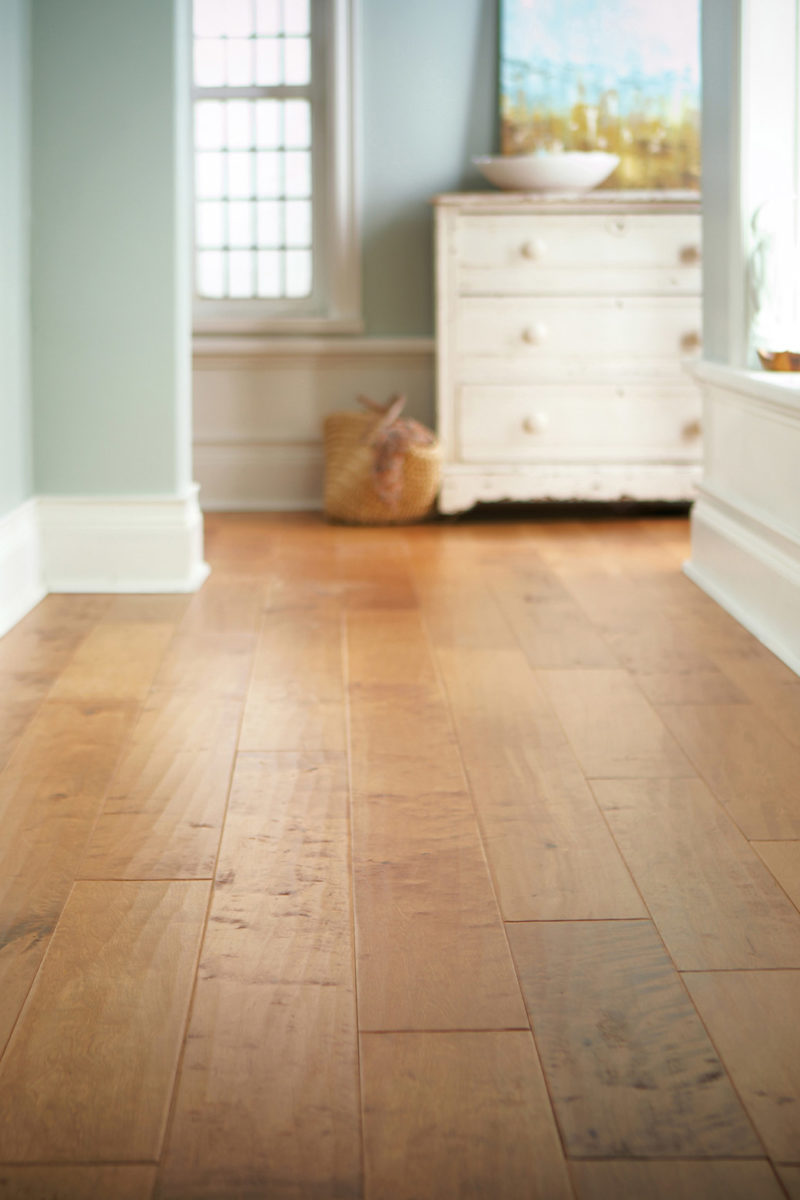
THE LIFETIME INVESTMENT, ENGINEERED FOR STABILITY
Elevating Your Space with Timeless Hardwood
Hardwood flooring remains the benchmark for beauty and added home value. At FloorSource, we specialize in high-performance Engineered Hardwood, which combines the luxurious aesthetic of natural wood with superior structural stability. Engineered construction is the preferred technical choice for London, Ontario homes, offering resilience against local climate changes and allowing for installation in moisture-prone areas where traditional solid wood cannot go.
We offer a curated selection of species—including durable Oak, Maple, and Hickory—finished with commercial-grade coatings and available in the modern, wide-plank formats that elevate any design.
Essential Hardwood Specifications
To ensure your investment lasts a lifetime, focus on these critical technical metrics:
- Engineered vs. Solid: Solid is one piece of wood, only for above-grade installs. Engineered has a real wood veneer fused to a stable, multi-ply core, allowing installation on all levels (including basements) and over radiant heat.
- Veneer Thickness: This determines the refinishing life. A minimum 2.0mm veneer allows for light professional sanding. Thicker veneers (3.0mm to 4.0mm) can be refinished multiple times, making it a great choice for a generational lifespan.
Janka Hardness: This is the international scale for dent and scratch resistance. Species like Hickory and Hard Maple rank significantly higher than softer woods, making them the best choice for high-traffic areas and pets.
Hardwood Engineered for London, Ontario’s Climate
London’s distinct four-season weather—characterized by humid, hot summers and extremely dry, freezing winters—creates a challenging environment for natural wood flooring. These constant temperature and moisture swings cause significant fluctuation in your home’s relative humidity (RH).
The Stability Advantage: Unlike traditional solid hardwood, which is prone to cupping, warping, and gapping in these conditions, engineered hardwood is built with a multi-ply core specifically to counteract these forces. This enhanced dimensional stability ensures your floor maintains its tight fit and level surface, minimizing movement caused by Southwestern Ontario’s unpredictable climate. For London homes, engineered hardwood is the essential technical choice for installation on any grade, and especially over basements or radiant heating systems.
Compare Our Leading Hardwood Flooring Brands
We carry hardwood flooring from trusted brands such as:
|
Brand |
Best For |
Key Feature/Technology |
Spec Data |
|
Radiant Heat & Scratch Resistance |
TrueShield™ Technology for enhanced scratch, stain, and wear resistance. Some collections feature an Anti-Bacterial coated surface. |
Wide planks (up to 8.5″ width), Engineered Hardwood structure, FloorScore Certified. |
|
|
Custom Aesthetics & High-End Design |
Offers unique finishes like Smoked, Wire-Brushed, and Hand-Scraped textures. Provides custom-sized Herringbone patterns. |
Multi-layer Engineered construction, 3.0mm–4.0mm thick veneers available, 35-year residential warranty. FloorScore Certified |
|
|
High Durability & Indoor Air Quality |
Good Foundations™ commitment to responsible sourcing and rigorous testing. Focuses on design-forward collections. |
GREENGUARD Gold Certified for low VOCs, can be installed on, above, or below grade, available in various Oak species. FloorScore Certified |
|
|
Custom Colouring & Flush Installation |
ThruColor™ Technology (proprietary process for pigment saturation through the veneer) and ArmorCare Finish (aluminum oxide coating). |
Diverse thickness options (1/2″ to 3/4″ available). 3/4″ collection provides flush install with other flooring. 35-year warranty. FloorScore Certified |
|
|
Value-Focused Durability |
Offers large, modern plank formats in engineered wood (Vidar Collection), focusing on quality construction and realistic grain definition. |
Often focuses on wide 7-1/2″ planks. Uses SPC or plywood core construction for stability. FloorScore Certified |
Frequently Asked Questions
1. What is the key difference between solid hardwood and engineered hardwood?
Solid hardwood is milled from a single piece of wood, suitable only for installation above grade. Engineered hardwood has a top layer of real wood veneer over a multi-ply core, providing significantly higher dimensional stability against moisture and allowing installation on any grade, including basements.
2. What veneer thickness is required for engineered hardwood to be refinishable?
For the possibility of light professional refinishing (sanding), the hardwood veneer should be at least 2.0mm thick. Thicker veneers, such as 3.0mm or 4.0mm, allow for multiple refinishing cycles, extending the lifespan of the floor.
3. Is hardwood flooring compatible with radiant heating systems?
Yes, but only engineered hardwood is recommended. Its multi-layered construction is designed to withstand the fluctuating heat from underfloor heating without warping or gapping, unlike solid hardwood which is highly discouraged.
4. Which wood species is the most durable for high-traffic areas?
Durability is measured by the Janka Hardness scale. Hickory is exceptionally hard and dent-resistant, making it ideal for busy areas or homes with large pets. Oak and Maple are excellent durable choices for typical residential use.
5. Can hardwood flooring be installed in a kitchen?
Engineered hardwood with a high-performance finish (like aluminum oxide) is suitable for kitchens, provided spills are wiped up quickly. Avoid using solid hardwood, and ensure the installation method provides a secure moisture barrier.
6. What humidity range must be maintained for hardwood flooring in London?
Hardwood floors, especially solid planks, require the indoor relative humidity (RH) to be maintained between 30% and 60% year-round. Homeowners in London must use humidifiers in the dry winter and dehumidifiers in the humid summer to prevent damage.
7. How long does hardwood need to acclimate before installation?
Acclimation is crucial. Solid hardwood requires a minimum of 7 days in the installation room. Engineered hardwood requires 48 to 72 hours, though following the manufacturer’s specific instructions is always mandatory.
8. What is the difference between a wire-brushed and a smooth finish?
A smooth finish is sleek and reflective but shows scratches easily. A wire-brushed finish subtly removes the softer wood grain, leaving a textured surface that hides minor scratches and dents better, making it highly suitable for active households.
9. What is the best cleaning method for finished hardwood floors?
Use a microfiber mop or cloth and a manufacturer-approved, pH-neutral hardwood floor cleaner. Avoid steam mops, excessive water, and acidic or abrasive household cleaners (like vinegar or ammonia), as they can dull the finish over time.
10. What installation method is required for engineered hardwood over concrete?
Engineered hardwood can be installed over concrete using either the float or glue-down method. Both methods require a moisture mitigation system—either a high-quality vapor barrier or a urethane-based adhesive with an integrated moisture barrier.