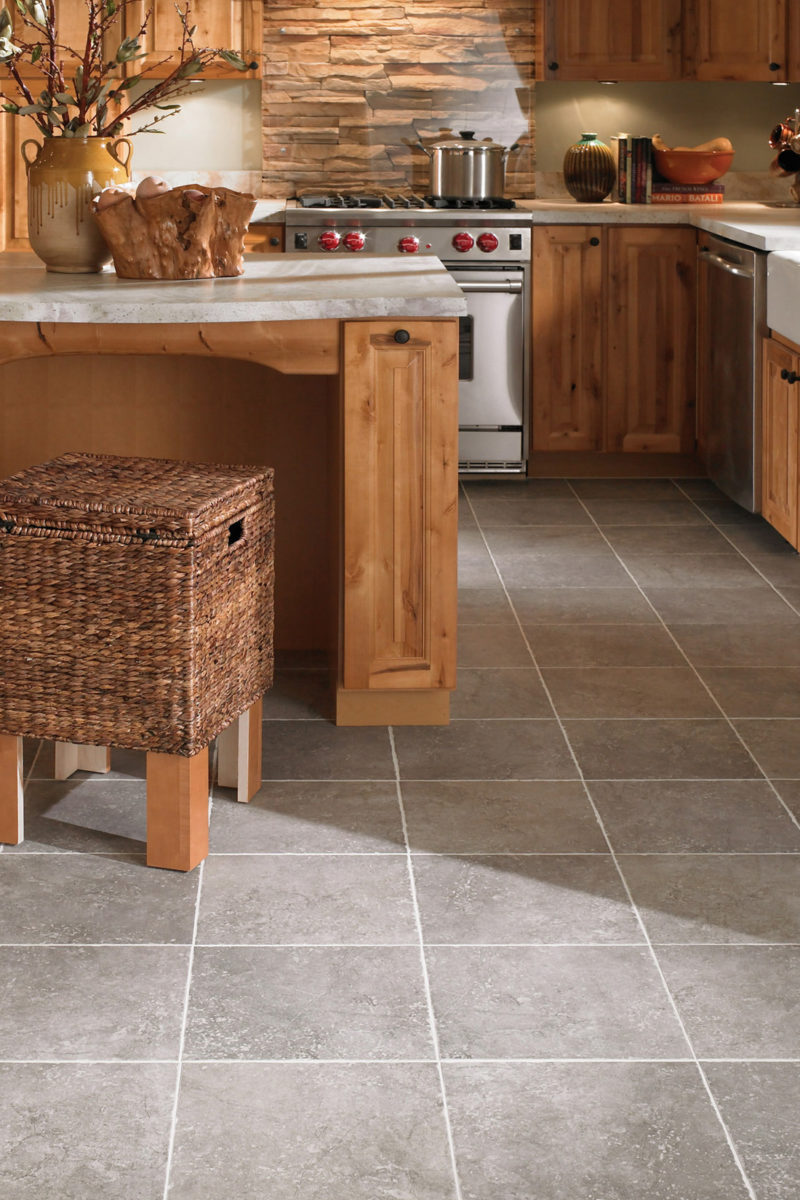
CERAMIC & PORCELAIN TILE
TECHNICAL DURABILITY & FROST RESISTANCE
The Benchmark for Performance and Design
Ceramic and Porcelain tile remains the gold standard for areas requiring maximum water resistance, longevity, and structural rigidity. At FloorSource, we guide you beyond the aesthetics to focus on the technical metrics—like PEI, DCOF, and Water Absorption—that guarantee performance. Modern porcelain offers superior density and durability compared to traditional ceramic, making it the essential technical choice for any floor or exterior application in the challenging London, Ontario climate.
Essential Tile Flooring Specifications
To ensure the longevity of your investment and compliance with safety standards, focus on these critical technical metrics:
- Porcelain vs. Ceramic Tile Flooring: The density is the key. Porcelain is fired hotter and is denser, resulting in a water absorption rate of le 0.5%. This low rate makes it frost-proof and significantly harder than traditional Ceramic tile.
- PEI Rating (Wear Resistance): The Porcelain Enamel Institute (PEI) rating measures surface resistance to abrasion. For residential floors, PEI III is the minimum; we recommend PEI IV or V for high-traffic entryways and kitchens.
- DCOF Rating (Slip Resistance): The Dynamic Coefficient of Friction (DCOF) measures traction when wet. A rating of 42 or higher is the current standard for safety in wet areas like bathrooms and mudrooms.
Ceramic Tile Flooring Engineered for London, Ontario’s Freeze-Thaw Cycles
In London, the primary challenge for tile is dealing with extreme temperature shifts and high moisture. For any exterior application—such as a front porch, patio, or even an unheated garage—you must select frost-resistant porcelain tile. Frost resistance is guaranteed only when the tile has a water absorption rate of 0.5% or less.
For interior spaces like mudrooms and entryways, the tile must be highly durable (PEI IV or V) and have a high DCOF rating to ensure safety when snow and slush are tracked in. By prioritizing these technical specs, your tile will withstand repeated freeze-thaw cycles and salt abrasion for decades.
Compare Our Leading Ceramic Tile Flooring Brands
We carry tile flooring from brands such as:
|
Brand |
Best For |
Key Feature/Technology |
Spec Data |
|
Large Format & Modern Design |
High-Definition Digital Printing technology for ultra-realistic stone and wood looks. Focus on large-format rectified porcelain slabs. |
PEI Ratings V (highest durability). Rectified edges for minimal grout lines. |
|
|
Safety & High-Traffic Areas |
StepWise™ Technology provides enhanced slip resistance that exceeds standard DCOF requirements for wet areas. |
Extensive range of ColorBody™ porcelain (colour runs through the body of the tile) for concealment of chips. |
|
|
Canadian Safety Standards |
Strong focus on verified DCOF (Dynamic Coefficient of Friction) safety ratings, critical for commercial and wet residential applications. |
Wide selection of specialized commercial-grade porcelain and exterior frost-resistant options. |
|
|
Natural Stone Replicas & Value |
Features proprietary ZeroSlip™ technology in select lines for superior traction without harsh texture. |
Excels in polished and matte rectified porcelain with low water absorption. |
|
|
Exterior Use & Reliability |
Offers a broad selection of fully Frost Resistant porcelain guaranteed to withstand freeze-thaw cycles common in the Canadian climate. |
Reliable, high-quality porcelain and ceramic options with low-VOC certification in many lines. |
Frequently Asked Questions
1. What is the minimum PEI rating needed for kitchen and entryway tile?
For residential floor use, the PEI (Porcelain Enamel Institute) rating should be a minimum of III. For high-traffic areas like kitchens, mudrooms, and entryways, we highly recommend a PEI rating of IV or V for maximum wear resistance.
2. What is the technical difference between ceramic and porcelain tile flooring?
Porcelain is fired at a higher temperature and contains denser materials, resulting in a water absorption rate of le 0.5%. Ceramic tile has a higher absorption rate. This difference makes Porcelain significantly denser, harder, and suitable for exterior use.
3. Does my tile flooring need to be frost-resistant for exterior use in London?
Yes. Any tile installed on a porch, patio, or outdoor kitchen in London must be verified as frost-resistant porcelain. If the tile absorbs more than 0.5% water, the freeze-thaw cycles of an Ontario winter will cause the tile to crack and fail.
4. What is the DCOF rating, and why is it important for bathrooms and wet areas?
DCOF (Dynamic Coefficient of Friction) measures a tile’s slip resistance when wet. For safety in residential bathrooms and commercial kitchens, a DCOF rating of 0.42 or higher is the current minimum standard for level interior floors.
5. What preparation is needed for a wood subfloor before tile flooring installation?
Wood subfloors must be structurally sound and free of deflection. A minimum 5/8-inch plywood subfloor plus a cement backer board or an uncoupling membrane (like Schluter-DITRA) is required to prevent tile and grout cracking.
6. Is it better to use sanded or unsanded grout?
Sanded grout is used for joint widths of 1/8 inch or wider, as the sand prevents shrinkage and cracking. Unsanded grout is used for joints narrower than 1/8 inch (common with rectified tiles) and on vertical surfaces where sanded grout would be difficult to work with.
7. What is ‘rectified’ tile, and what is its benefit?
Rectified tile has been mechanically finished (ground) after firing to achieve near-perfect sizing and sharp, 90 edges. This precision allows for minimal grout lines (as narrow as 1/16 inch), creating a clean, seamless look, especially in large formats.
8. Can ceramic or porcelain tile flooring be installed over radiant floor heating?
Yes, tile is the most effective floor covering for radiant heat. It is an excellent thermal conductor and its rigidity prevents damage from temperature changes. An uncoupling membrane must be used to protect the assembly from expansion and contraction stresses.
9. What is the best way to clean and maintain porous grout lines?
For traditional cementitious grout, regular cleaning with pH-neutral solutions is best. It should be professionally sealed every 1-2 years to prevent staining. Alternatively, using non-porous epoxy or urethane grout eliminates the need for sealing.
10. Is it safe to install tile directly onto a concrete slab in the basement?
Yes, but you must assume all concrete slabs have moisture. You need a premium modified thin-set mortar and must apply a crack isolation membrane (or uncoupling membrane) to prevent movement from the concrete transferring to the tile and causing hairline fractures.